When I first started my genealogy journey back in the mid to late 1990s I made a conscious effort at the time not to work on my maternal grandmother’s paternal line. My great grandpa had left the family. Why would I care who his ancestors were?
But things changed in my thinking after my mom died in 2011. I began to do more than just find birth, marriage, and death records. Finding stories about family made them more real. The story of my great grandparents was far more complicated than just that great grandpa left.
My great great grandfather was John Ray Mohney. He was the son of Adam Mohney and Amanda Moyer. One thing I learned about the family is Adam died when John was only 3 years old. His mother remarried. When he was 18 he married Jennie Shingledecker, my great grandmother.
John made some pretty bad choices in his life. I won’t go into all of those. He definitely hurt people. But when I found out what likely instigated the final ending of the marriage it all started to make sense.
Kalamazoo Gazette, Sun, Jun 6, 1926, page 2.
I am hoping it was a choice by all adults involved to have the relationship that they did. But when the poverty that they were living in with all of those children was found out, that must have been some sort of sign for my great grandmother to tell him to move on. Of course that is just a guess on my part. No matter how it went down it started to all make sense. It is no wonder he left. He was not providing enough for such a large family. The stigma for whatever their relationship was would have been too great.
No matter what went down between those adults, it is all starting to make more sense and my thinking about him and doing his family research has definitely changed. There isn’t much more left to find out about him besides hoping his other family has some pictures somewhere. Besides that, my focus on that line has been to learn about his ancestors. Because he may have chosen the second wife, that doesn’t mean the people who made him aren’t worth researching.
In family history research it is common to come across conflicting information about an ancestor. This information can come from family members sharing stories or from the actual records we find. Here are some steps to take to resolve those conflicting pieces of information. These steps are especially for an ancestor that you’ve done as detailed as possible of a search for records.
Start out with knowing what specifically you are wanting to find once you resolve the conflict. Is there conflicting information on the birth date of an ancestor? Knowing specifically what your research question is will help you better look at the sources you have already gathered. When did John Mohney, husband of Jennie Shingledecker and father of Beatrice Mohney, die?
Gather all the information on this ancestor that is conflicting. I recommend if you haven’t created research notes on this ancestor, this could be a good time to start. These notes should be in chronological order. They will help show any conflicting information. You can of course start those later and just write notes on the conflicting information. A spreadsheet could be a way to visualize the conflicting information if working at the computer is helpful in your research.
Next, look at where each piece of information came from. The simplest way to look at this is to ask whether the person who gave the information on the record was an eye witness to the event. While there may be errors even from eye witnesses (like a family member of the deceased filling out the death record and giving the wrong information for parents), looking at all the evidence you have and where it came from will help you know whether you can trust that the information in a piece of evidence is correct or not, in many cases. An obituary (unless written in advance by the deceased) while helpful is often not written by someone who was an eyewitness to the person’s whole life. Evaluating the records can give you clues on whether you can fully trust a source.
You’ve evaluated each piece of evidence to see if you’ve found a source that was from an eye witness. Is a source you are looking at an index or an actual scan of the original document? You’re also looking at things like ages, names (spellings, etc), and locations and making sure they are similar to other facts that you have. If your ancestor only lived in Michigan and you find a marriage record in South Dakota, it is highly likely that the South Dakota record is not your ancestor unless other records give evidence of your ancestor being in South Dakota around that time.
My research question in the second paragraph above, “When did John Mohney, husband of Jennie Shingledecker and father of Beatrice Mohney, die?” This was a research question I had about my maternal grandmother’s father. The family didn’t know when he died. Census records noted my great grandmother as widowed. Marriage records for some of my great aunts said that their father was dead. These records showed a picture that my great grandfather died after the 1920 Census and before the 1930 Census. But based on family rumors about there being a second wife I was able to find his death record. He had not died in the 1920s. He had died in 1945 in Minnesota. So it ended up that he was dead to my great grandmother and their kids back in Michigan, but he went on living with his second wife and their children in Minnesota.
In many cases you will be able to figure out which piece of information is the correct one. Other times you’ll get a close to the answer. But there will be times where you won’t be able to resolve the conflicting information and you won’t be able to confirm the information you are looking for. This process will at least help you evaluate your sources and figure out other areas where you could search that you may have overlooked.
This prompt made me think of one of the projects I am doing for someone. On a census record one of their ancestors is noted as step son and notes a different surname to all the other records for this son. Subsequent generations use the family name this son’s father had, but if it wasn’t for this one census record the family might not even know that he was not his father’s biological son.
Not long after that census year the father left the mother. Likely oldest son being noted as his step son was likely a sign that the relationship was collapsing. It makes me wonder if the son knew that his father wasn’t his biological father.
I’m reminded of a census record from my own family tree. My 2x great grandfather, William Henderson, is listed as the adopted son of his mother’s husband. Same as her second born. But the previous census the children both had the surname of Littler. What changed between those two records. Did William and George grow distant from their mother’s husband? Was there some sort of rift? Or maybe these two boys still had contact with their biological father’s families and they felt a connection to their possibly deceased fathers and wanted to honor them by keeping the surnames they had a birth.
The one son from the first story could have known his father wasn’t his biological father, but since he knew him since he was a small boy he was all the father he knew so kept that name. And with my own ancestor and his brother, they may have had a good relationship with their step father. They are noted as adopted sons and not step sons after all. It is hard to know exactly what transpired with these two families. They all saw each other as family, no matter what the blood relation was or not. Family is often bigger than blood in the end.
This is a favorite picture of my family. There are girls standing in an archway between rooms. Very period dressed for the mid to late 1950s. The tallest girl is my aunt Connie. The two girls closest to her are two of my other aunts, and the blonde at the end is likely a cousin.
It is the two figures seated that draw me most into this picture. The woman is my grandmother, Beatrice. And the little girl is my mother, Jennie. I never got to meet my grandma, so when my mom got this picture about 20 years ago it was so neat to see my grandma in such a candid pose. And of course to see my mom as a tiny little girl was pretty neat, too, as there weren’t many pictures of her in early childhood before her mom died. This is only the second picture I’ve seen of her as a small child.
I look at this picture and wonder who my mom and grandma were looking at. Who was just off to the right making grandma smile. Was it my grandpa behind the camera? So many questions. No answers to these questions, but it is nice to see a snapshot of my family well before I was born.
As I looked through all the research I have done to find something that encompasses the prompt of a breakthrough moment an idea popped into my mind. I realize this prompt is more for things like breaking through a brick wall or finding out something hugely important in telling an ancestors story, but I am doing to look at it from a different perspective.
I think a breakthrough moment I have had in all the research that I have done is that family history research shouldn’t be focused on finding big stories. While it is always interesting to find something that tells you a lot about your ancestor, sometimes it is the little things that really brings these people to life. Professions, clubs, small newspaper stories/ads, or even a photograph that you haven’t seen before. Your ancestor may not have done something overly newsworthy, but there are pieces of them still there in the records for you to find.
One tip is to look for your ancestor in newspapers. Sometimes you can find them in little things like a letter waiting for them at the post office. Or an announcement for a club meeting. Another thing to find in the paper would be sale of land between two people. You can also find out about visits your ancestor made to other people outside of their town or city. Or if they receive a visitor from out of town. Those extra names can be use for FANs (Friends, Associates, and Neighbors) research to possibly broaden the story.
Another tip is to look through any directories for the area that your ancestor lived. Often the directory showed a little bit about what your ancestor did for a living. And for your women ancestors the directory often told if they were a widow of a certain man and will list his name. Some directories even note who died since the last director was made.
There tends to be a rush to get back as far as possible in your research. Go slowly. Look in several different places. Think outside the box on where you can find family history. A trip back to where your ancestors lived may be in the works, but you would be surprised what can be found online now. Like over at Archive.org has a lot of local papers that might not be available locally.
Coming at family history from a place of seeing a fuller picture of your ancestor will make the search far more fulfilling than hoping to find some famous ancestor or to reach back to Europe or elsewhere. Some people can’t even get back to the original home land through the historic records. Learning about each generation beyond birth, marriage, children, and death is so important to having a well rounded picture of the ancestors and to have a more fulfilling connection to the past.
I was trying to find something to talk about from my volunteer work or client work related to “A Theory in Progress” but the thing that popped in my head first was my maternal 3x great grandma Susan Huff. I talk a lot about my mother’s line and Susan has always been the last mother I can name as I have not confirmed her mother or father. We had a few clues on where she and Richard lived before moving to Ohio, but nothing concrete.
Susan’s death record had her father as Joseph Huff, but nothing else connected her to her father. I knew she was from Pennsylvania so I looked up Joseph Huff in the census. I was able to find one that lined up more than the others. He lived with his wife Hannah and likely 9 children. There are three daughters who would have been of age of marriage around the time Susan married Richard. The issue is none of them are named Susan. The possible names are Angeline, Emeline, and Catharine. There is a Catharine who had married a Fisher in the county, so that is likely not Susan, but there are records that mix of Catherine and Angeline as marrying the same Fisher, so that adds some confusion. It seems most likely that Emeline is Susan, but that is just a guess.
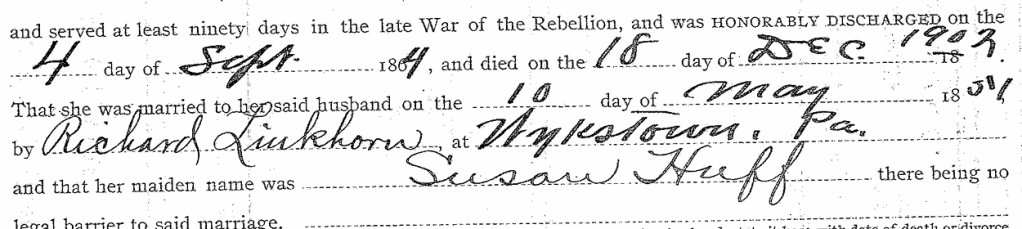
Susan Huff married Richard Tea on May 10, 1852. We did not know this date or the general location until I ordered Richard’s Civil War records and the pension records. In another spot in the pension it states they were married May 10, 1851 by Richard Linkhorn at Wykstown, PA. The issue with this information is there are no records of a Richard Linkhorn in newspapers or in census records. And to add to the issue, there is no place called Wykstown.
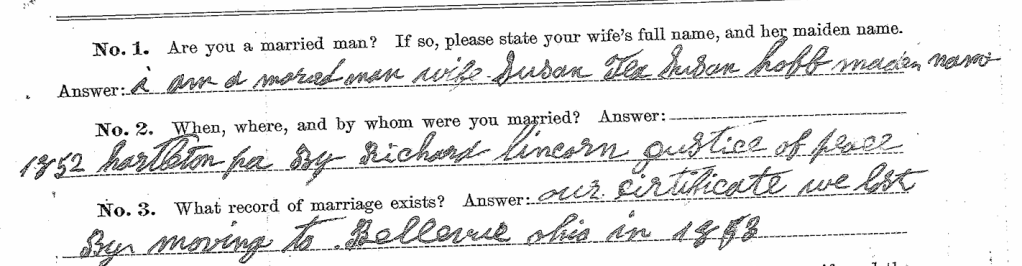
Another section notes they were married in 1852 in Hartleton, PA by justice of the peace, Richard Lincorn. Hartleton is a borough in Union County, PA. This county coincides with the Joseph Huff that is believed to be Susan’s father. On this record it is noted that the family moved to Ohio in 1853 and in the move they lost the marriage record.
In a statement from Susan’s sister Sarah, it notes that Susan and Richard were married in at the home of Eliza Manbeck’s family in a place that was called Centreville in 1904, but went by another name when they married.
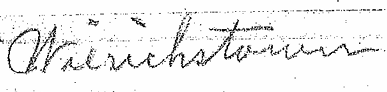
I am still trying to figure out this name and if it was even called that for long. But from what we do know, the marriage did take place in Union County. I found online that Centreville was southwest of Penns Creek in Union County, PA. Near Jack’s Mountain.
Update. While in the middle of writing up this blog post I was doing a page by page review of the 1850 Census record there in Hartley Township (which is where Centreville was in). I ran across someone by the name of Richard Lincoln. I went to Newspapers dot com and looked up Richard Lincoln and Justice of the Peace. And there he is listed as the Justice of the Peace for Hartley for 1851. So we know that his name was not Richard Lincorn or Richard Linkhorn. It was Richard Lincoln. Which kind of makes more sense. It should be noted that a man named Joseph Hartley was a witness to the wedding. He happened to be living with Richard Lincoln in 1850.
Susan may be Emeline from Joseph and Hanna/Joanna Huff’s family. If she wasn’t, she may have been living with other family members at the time of the 1850 Census. There is a chance that she was living with an uncle in Hartley Township in 1850. There is a Susan Huff living with Daniel and Sarah Huff. This reason this is a possibility is mostly because the ages of the children in the house are not in order from oldest to youngest. While Susan was supposed to have been slightly older than this girl, there is still a chance it is her. Regardless of whether this is our Susan in the home of Daniel and Sarah, they are likely her aunt and uncle (or some other relation) so if Emeline is our Susan, then there are many reasons she would be married near aunt and uncle instead of at her parents house.
In the pension record Susan is mentioned as being married at the home of the parents of Eliza Manbeck. Eliza is likely a relation to Susan as her maiden name was likely Huff. So possibly she is a daughter of Daniel and Sarah Huff. There is a chance Eliza is listed more than once in the 1850 Census living with two separate families (maybe even a third location which is not far from the other two) and thus why she wasn’t at home with her parents before her marriage. If Susan Huff got married at the home of Eliza Manbeck’s parents, then they were likely Daniel and Sarah Huff, her likely aunt and uncle.
Until we find a record for Susan and Richard marrying, or find some other evidence of Susan actually being Emeline (or one of the other daughters), we cannot fully confirm that we have her parents. It is still highly probable that Emeline is her and the Susan Huff in Hartley Township is her. I will likely need to contact the archives and other repositories in the area to see if any marriage records with the Justice of the Peace still survive.
I’ll be following the 52 Ancestors in 52 Weeks prompts this year from Amy Johnson Crow’s website (Find the description and how to sign up to get the prompts HERE). The first prompt is Fresh Start. I’ve chosen my great grandmother Jennie (Shingledecker) Mohney to write about for fresh start.
Jennie was born in 1890 in Schoolcraft, Michigan. Her parents were William and Nettie Mae Shingledecker. She was the 2nd child of four. She married John Ray Mohney when she was 18 years old. They had their first child before the end of that year. By the 1920 Census the family had moved to South Dakota and included 4 more children. Jennie was still in South Dakota during the South Dakota state census of 1925 and she had 3 more children by that date.
Things were not going great in the family as her husband had taken on a mistress. He had two children with the woman while still living with Jennie. Things must have come to light sometime in 1925 or early 1926 because Jennie was back in Michigan with the birth of her youngest daughter, Beatrice (my grandmother).
From her son Carl’s obituary I found out that John Ray actually moved the family back to Michigan, but then ended up leaving the family (to go back to his mistress). It must have been difficult to lose her husband that way. One way that she made it work was to tell people that her husband had died. All records I’ve found so far show Jennie as a widow. These include census records from 1930 and 1940 as well as marriage records for her children.
Jennie wasn’t alone in handling this fresh start. Her older children definitely helped out. Not only did she have her oldest daughters to help out, it seems she fostered a spirit of working hard in her children. In her son Carl’s obituary it notes that he taught his children “”The Mohney Way”: value hard work and do things right the first time.” I imagine that was more something he learned from his mother, Jennie, as she was the one who raised Carl alone for most of his childhood. While I get calling it the Mohney Way because his last name was Mohney, but I would have called it the Shingledecker Way, as his mom was the one who taught him hard work and sticking with those who matter most.
I don’t know much about her life overall, but I know Jennie was a hard worker. She raised 9 children who all grew to be hard working adults. She spent her later years with her children’s families, including visiting her daughter May’s family home in Charlevoix, Michigan.
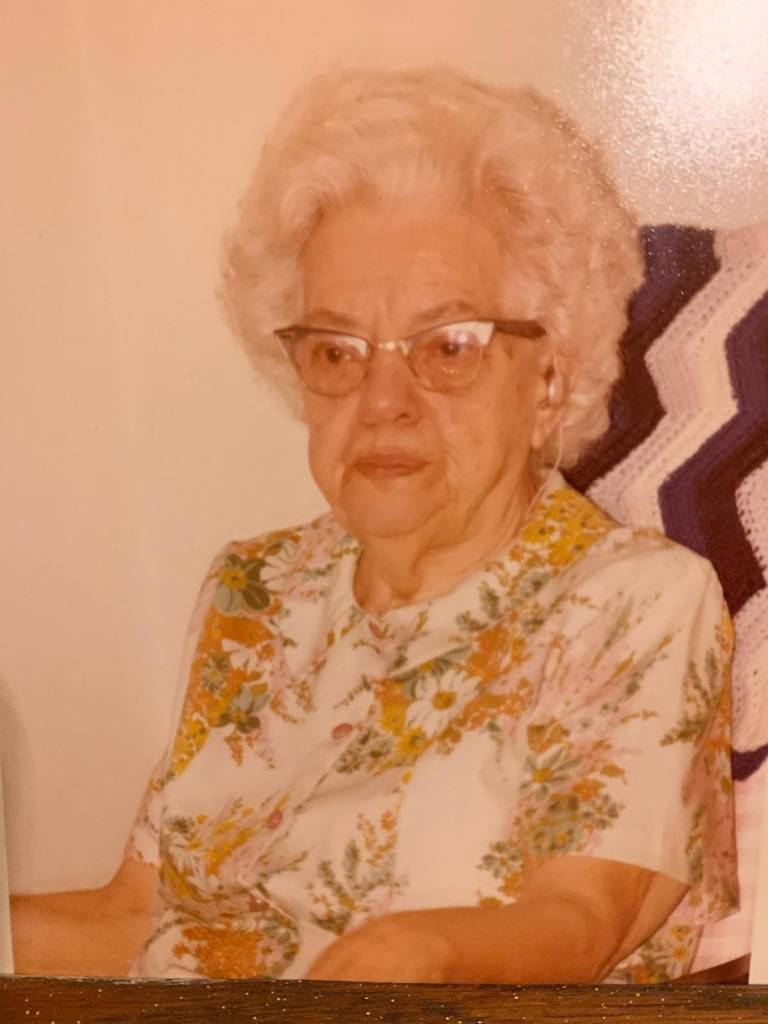
Jennie (Shingledecker) Mohney was a hard working woman who raised 9 children. I am grateful for her determination to care for her children even through the heartache of losing her husband the way she did. I’m glad my grandmother had such a strong woman role model in her life because she ended up making a good impression on my mother who made a good impression on me. I am forever grateful for her. She truly made the most of her fresh start away from her husband.




You must be logged in to post a comment.