
Continuing on with 52 Ancestors in 52 Weeks (though I think I’m just going to call this 52 prompts at this point. lol ), and the second is ‘A Record That Adds Color”. Again I am going to share some research I’ve done for other projects instead of my own ancestors. This post is on a man who went by a few different names over the years, which adds to why I chose to write about him. He was definitely a colorful person.
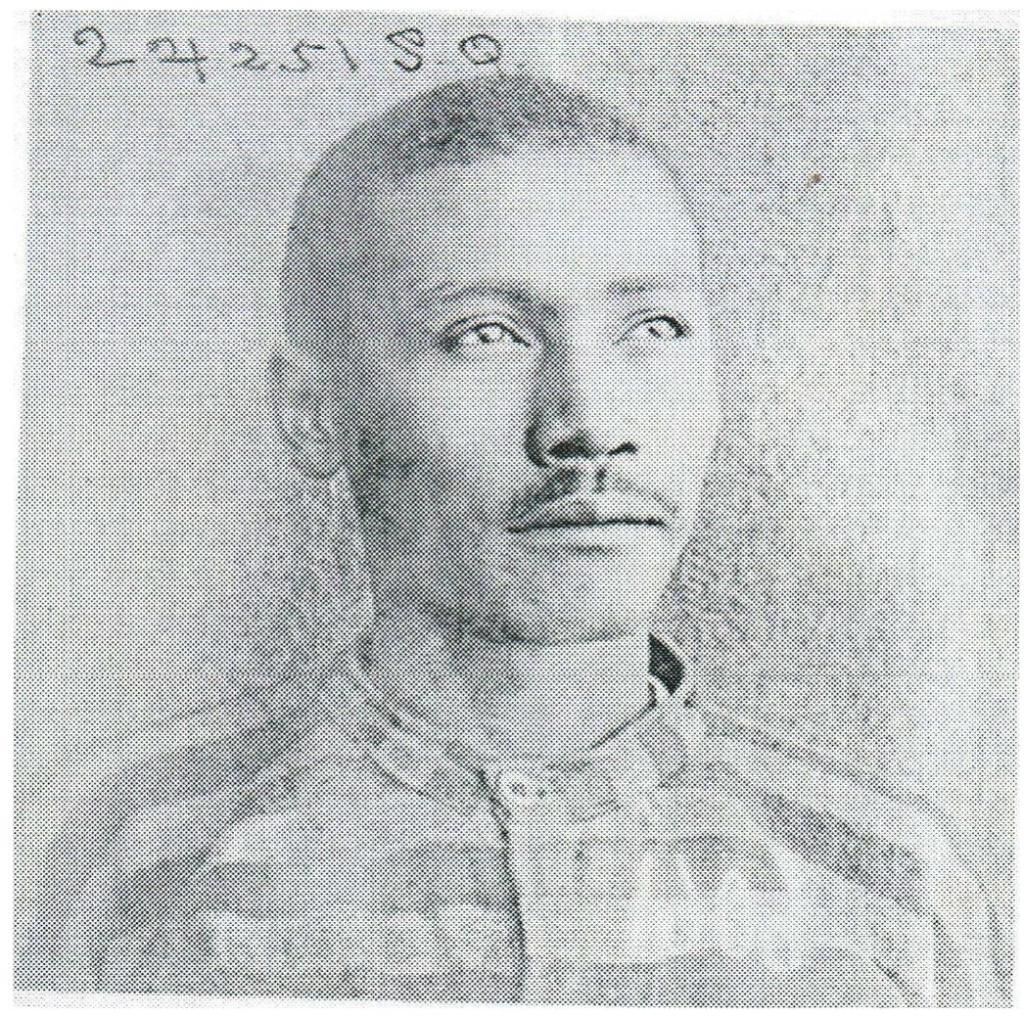
Lucius Lehman was born March 10, 1863, likely in Jamaica (or the West Indies as it was called in those days). His birth location is based on several earlier records connected to him, including his naturalization records. His arrival date to the United States was supposedly sometime around 1886. His Declaration of Intention to become a US Citizen was filed in 1899 notes his country of birth and his arrival date of October 1886. The only issue with this date is he was in Los Angeles in December of 1886 when he married Ann Smith. While he could have quickly left New York City and gone to Los Angeles, it is more likely he arrived sometime before the Fall of 1886. The 1910 Census gives his arrival date at 1880 and the 1920 Census gives it as 1882.
Lucius made some bad choices over the years. Attempted murder, assault of a child, theft, murder. So my writing a blog post about him is not to extol him as some great person. I am just telling a story about a life that was very colorful. The first records of him were related to attempted murder of his wife and assault of his step daughter. He was sentence to 12 or 14 years in a state prison, but was released after about nine years, for good behavior.
Lucius married Mattie Clark in December 1897. About 6 months later he was arrested for stealing two bags containing valuable papers from James Robinson. Robinson put an ad in the paper offering a reward. Lucius returned some of the papers to a lawyer who brought them to the newspaper and requested the reward. The police were called and Lucius was told to find the rest. He said he found the items in some ravines adjoining Westlake Park. After helping the police for a few weeks in finding items, the police arrested him.
He was brought before Judge Owens and represented himself in the case. He cross examined witnesses at great length. The newspaper articles note this: “Lenan is not a full-blood negro. he says his grandfather was an Englishman, and that he was educated for diplomatic service in London. He professes to speak thirteen languages proficiently and is a master of several systems of shorthand reporting, besides a system of his own invention. He is 37 years old, and served several years in the British navy on the Camperdown and other first-class warships prior to coming to Los Angeles.”3 It was found during this case that his marriage to his first wife was not finalized by legal divorce, so a bigamy charge was laid upon him.
More details in the newspaper articles around this case show him saying he was in the country “in obedience to a commission received from the Cuban insurgent authorities, and that proper inquiries at the offices of the Cuban junta in New York City will establish his identity”4. It is said in another article that he worked under General Garcia in Cuba and was wounded at the battle of El Caney.
The bigamy case was thrown out, likely because the first wife had filed for divorce, but did not have the funds to complete the divorce. And in the case against him for burglary, he was acquitted, mostly for lack of evidence that he actually stole the items.
Mattie and Lucius had a bit of a rocky marriage, but while they were still together they had two daughters. Anita was born in 1899 and Marion was born in 1903. In 1903 Lucius became a citizen of the United States.
Lucius was living in Riverside County by 1910. And it was there that he got into an argument with Theodore Lashley in Winchester. The argument ended in Lucius shotting Theodore. Theodore died the following day. Lucius was charged with murder and was convicted of the crime. He was sentenced to life in prison. He would be sent to San Quinten up in Marin county, which is on the bay just above San Francisco.
While in prison Lucius would become the prison store clerk. He also would later be considered a sort of mullah (teacher) for the religion of Islam and had influenced many people to accept the faith while in prison. There are no records that show he practiced the religion, but with the number of stories told and the research of people like Dr Patrick D Bowen, he made an impact on many people during his time at San Quinten. And Dr Bowen shows evidence that his impact even reached the one day founder of the Nation of Islam, Elijah Muhammad, who is said to have done time at the prison.
Lucius did not spend the rest of his life in prison. He was paroled on August 7, 1924. I have not found him in the 1930 Census, possibly he had only just gotten back to Los Angeles County by the time of the 1930 Census. He died on February 11, 1937. Interestingly, he was at the National Military Home in Los Angeles when he died. How and why he ended up there is a mystery and likely will require digging through any existing records from the National Military Home. His birth place is noted as Kartoon, South Africa. But possibly it was meant to be Khartoum, which is a city in modern day Sudan, as there is no city similar to that name in South Africa. Even till the end this man was a mystery. He was buried at Lincoln Memorial Park Cemetery in Carson, California.
Something interesting to note about his children. His daughter Marion married actor Edgar Hughes “Blue” Washington. Their son Kenny Washington went on to be the first African American to sign with the National Football League in the modern era.
- Many of the records mentioned in this blog post can be found on Lucius’s FamilySearch profile. https://www.familysearch.org/en/tree/person/sources/G7Y2-63M
- Dr. Bowen’s article on Lucius Lehman ‘The Colored Genius’: Lucius Lehman and the Californian Roots of Modern African-American Islam. https://www.academia.edu/3731536/_The_Colored_Genius_Lucius_Lehman_and_the_Californian_Roots_of_Modern_African_American_Islam
- Remarkable Prisoner, The Los Angeles Times, Sat, Jul 2, 1898, page 5, column 3. https://www.newspapers.com/article/the-los-angeles-times-lenan-charismatic/172535688/
- Lenan Feels Hurt, Los Angeles Evening Post-Record, Fri, Aug 12, 1898, Page 1, 3rd column. https://www.newspapers.com/article/los-angeles-evening-post-record-lenan-fe/172535944/
 On Their Shoulders